15 Questions to Ask a Podcast Producer Before You Sign
A vetting checklist for hiring a podcast producer. The 15 questions that separate a real partner from someone who points a camera at you.
Every podcast producer has a good looking reel. A reel is the best ten seconds of the best few projects cut to music, and you can build a great one out of work that went badly.
What it can’t tell you is whether anybody planned those shows or just recorded them, whether the client walked away owning the files, whether episodes went out on schedule, or whether somebody caught the sentence that should never have been published. That’s where these projects break.
So ask about that. We’ve produced more than 300 episodes since 2023 and this list is built out of the parts that go wrong. Fifteen questions, and you should ask all fifteen. Pay less attention to the answers than to how fast and how specifically they come back.
Should my podcast be video, and why?
Lead with this one. It exposes more than anything else on the list.
Somebody who knows the work says yes for a business podcast and then gives you the reasons without being asked. Video builds trust much faster than a voice by itself. YouTube is a search engine and an audio-only show can’t get in the door. It will even build a video for every episode straight off your RSS feed, which is a distribution channel audio alone never reaches.YouTube on podcast RSS deliveryChecked 2026-08-04 Video gives you clips for everything else you publish.
If they waffle, or if they tell you audio is fine before asking one question about your goals, they haven’t thought about how anybody is supposed to find your show. You’ll get finished episodes back with no plan attached to them.
What happens before recording day?
Make them walk you through it, step by step.
If what comes back is scheduling and a location, you’re hiring a production crew. Crews are worth hiring and plenty of the time a crew is all you need. It isn’t a producer.
A producer talks about goals, audience and positioning before anything else. Who exactly are you talking to. What do you want that person to believe when the episode ends. What are you qualified to say that nobody else in your market is saying. It’s the same work you’d do before writing a blog post you want to rank: map it out first, then make it.
Skipping that step is the most common reason podcasts stall out. People sit down in front of a microphone without knowing what they’re supposed to say, get three vague episodes out, and lose interest.
Who owns the finished files?
You do. Say it on the call and then get it into the scope.
Finished episodes, the exported video, the raw footage. All of it belongs to you. A producer sitting on your files is sitting on leverage, and the only use for leverage like that is making it expensive for you to leave.
Ours is short: the client owns the work. We keep working copies so we can pull an old clip when somebody asks for one, but they’re your files, full stop.Ask for this in writingOwnership of the finished episodes, the exported video and the raw footage. One sentence in the scope is enough.
What do you cut without asking me?
This one catches people off guard, and the answer tells you a lot.
Conversations wander. Sooner or later you or your guest says something legally risky, or plain wrong, or something that’ll read terribly as a thirty-second clip six months from now.
Somebody paying attention catches those and takes them out before anyone hears them.Nation's noteWe cut this stuff as a matter of course and tell the client what came out and why. Nobody thinks to ask about it, and it’s the thing most likely to bite them. Somebody who has never thought about it will publish them, and you’ll find out when a client emails you about it.
What happens if an episode does not work?
Sometimes the guest gives you nothing. Sometimes the topic falls apart halfway through, or you were running on four hours of sleep and it shows.
Ask what happens then. Does it go out anyway to protect the schedule, or do they call you? Is a re-record included, or is it billed?
Any of those can be the right answer as long as somebody decided in advance. The one to worry about is the producer who has clearly never considered it, because that’s the one who quietly ships the bad episode.
How many episodes are we making, and over what period?
You want a number and a date. Six episodes by the end of October is a scope. An ongoing monthly arrangement of unclear size is where these projects go sideways, and it’s usually nobody’s fault, it just never got written down.
A defined batch protects you, too. When it’s finished you have a natural place to stop, look at what you got, and decide whether to keep going. You don’t need an awkward conversation to get there.
What is included, specifically, and what is extra?
Make them say the whole list out loud. A complete answer covers planning, recording, editing, audio mastering, video editing, cover art, show notes, social clips, and distribution setup.
The ones people forget to ask about, and then get an invoice for, are cover art, intro music, transcripts, and social clips. Ask about each of those by name.
How do you price this, and can I see the scope in writing?
Plenty of good producers quote per project instead of publishing a rate card. A six-episode launch and a weekly show for a year aren’t the same job and one number can’t cover both. We quote per project for that reason.
What you shouldn’t accept is a number with nothing attached to it. After a scoping conversation you should get a written scope with a price sitting next to it, before you sign anything. If you can’t get that, walk.
What does the schedule actually look like from recording to publish?
Ask for the turnaround in days, from the day you record to the day an episode goes live. Ours runs about a week. We record Roger Hall on Thursdays and his episode, thumbnail and social clips go out the following week.
Then ask what happens when they’re late, because at some point they will be. Consistency is most of what makes a podcast work, and the day you hire somebody, their turnaround becomes part of your consistency too.
Who is actually in the room on recording day?
The person who sold you the project is not always the person who shows up on the day. That isn’t automatically bad. Bigger shops rotate crews and the crew can be excellent. You want to know before recording day instead of on it.
Ask who runs the session, who runs the cameras, and who picks up the phone if something breaks an hour before you’re supposed to record. At our place the answer to all three is me.
What do you need from me, and how much of my time will it take?
You want a short, specific list back. Show up prepared, take a planning call, approve a cut.
If the honest answer involves you writing your own outlines, booking your own guests, and sitting through three rounds of edits per episode, you’re buying less help than you think you are. Ask for it in hours. Somebody who has done this a few dozen times can tell you roughly what it costs you per month.
Do you handle distribution, and where does the show end up?
Recording is maybe half the job. Ask which platforms they set up, and then ask whose name the accounts are in.
Yours. The podcast host, the YouTube channel, the analytics. If a producer opens those under their own accounts, you can’t leave without leaving your audience behind, which is usually why it was done that way in the first place. We set clients up on Buzzsprout and YouTube and the logins are theirs.
How do you define a successful podcast?
Listen hard to this answer.
If the first words out are views and downloads, be careful. Most of the time people think views equate to success, when a podcast is more than views. You don’t even need views to have a successful podcast. It’s the wrong benchmark, and it’s the easiest one to point at, which is why it keeps getting used. For scale: the Podcast Index counts about 4.7 million shows, and roughly 16% of them published anything in the last 90 days.Podcast Index statisticsChecked 2026-08-04 Most podcasts never get far enough to worry about download numbers.
A business podcast is working when your existing clients know about it and your prospects show up already convinced. It reinforces why you’re different and it puts you at the front of somebody’s mind when a friend asks them for a referral. Roger Hall picked up a couple of clients who found him through his show. The bigger result was that the audience he already had finally understood what made his practice different from every other wealth manager in town.
A podcast is successful when your current clients or your prospecting clients know about it. It reinforces your brand and your knowledge and puts you at the cornerstone of who they should refer to. It solidifies your position.
Can I talk to a client you worked with for more than a year?
Anybody can make a good first project. Year two is the interesting part.
A long-term client will tell you the truth about turnaround, about whether emails got answered, and about whether the quality held up after the novelty wore off. If a producer can’t point you at one, ask why not.
When would you tell me not to hire you?
Ask it in those words, then stop talking and listen.
Anybody worth hiring has an answer ready. Here’s ours.
A producer who can’t name one situation where you should walk away is selling you something. Everybody has a client they’re wrong for.
Take this into the meeting
0 of 15
What to do with the answers
Two things to listen for.
Specificity is the first. Good answers come back fast and full of detail, because the person has done this enough times to have a process. Vague answers usually mean it gets improvised every time, and improvised is what misses deadlines.
The second is whether they’ll ever tell you something that costs them money. That’s what question 15 is for. Somebody who will talk you out of the wrong project will also tell you the truth when your third episode isn’t good, and you’ll want that more than you want a reel.
If you are in the Treasure Valley
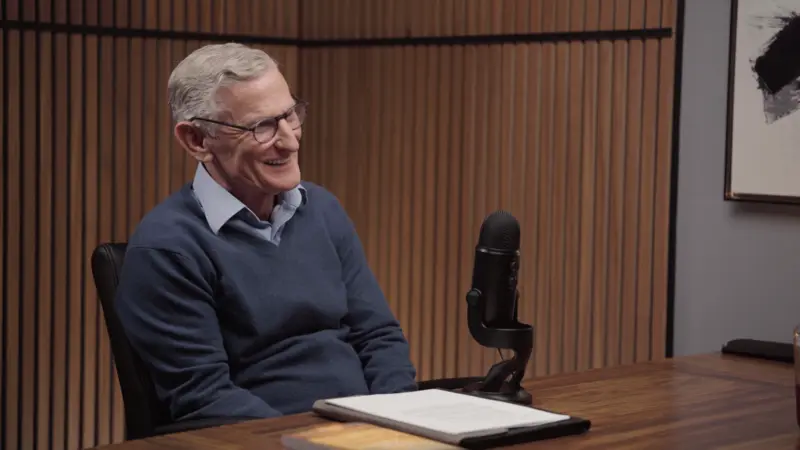
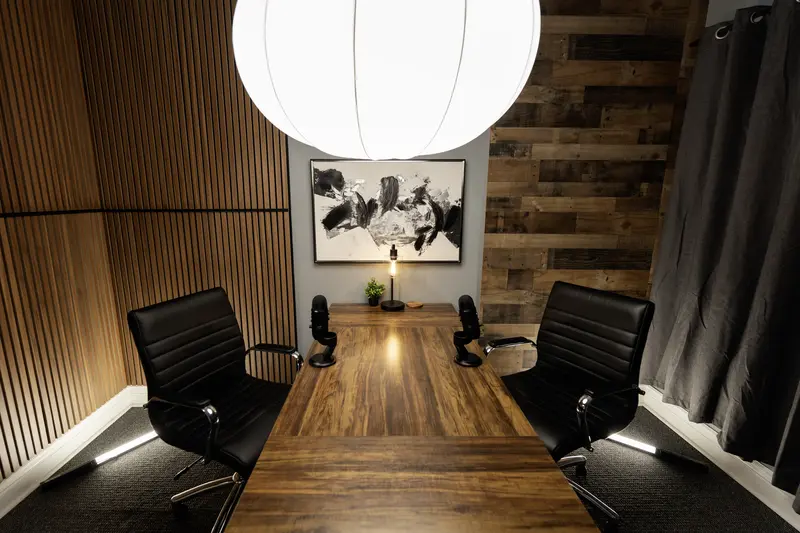
We make video podcasts out of a studio in Eagle, twelve minutes from downtown Boise, and we’re happy to be asked all fifteen of these. Bring the list.
If the honest answer turns out to be that you should be doing this yourself, I’ll tell you that on the call and the whole thing will have cost you half an hour.
Common questions
- What should I ask a podcast producer before hiring them?
- Start by asking whether your podcast should be video, and why. A good producer answers that confidently and gives you reasons about trust, YouTube, and credibility. After that, ask who plans the episodes, who owns the finished files, what happens if an episode does not work, and what specifically happens between recording day and publish day.
- Who owns the files when you hire a podcast producer?
- You should. The client should own the finished episodes, the video, and the raw footage. Ask for that in writing before you sign. Some producers keep the files as leverage to keep you on a retainer, which is a bad sign.
- How do I know if a podcast producer is any good?
- Ask what they do before recording day. Producers who only talk about cameras and editing are production crews, not producers. The ones worth hiring will describe a planning process: who your audience is, what you want them to believe, and what you are qualified to say that your competitors are not.
- Should my business podcast be video?
- For almost every business podcast, yes. Video builds trust far faster than audio alone, it gives you YouTube as a second distribution channel, and it produces clips you can use everywhere else. It is also the part that is hardest to do yourself, which is where a producer earns their money.
- How long should a podcast contract be?
- Be careful with long lock-ins early. A first engagement should be short enough that you can walk away if it is not working, usually a defined batch of episodes rather than an open-ended monthly commitment. Once you know the relationship works, longer terms are fine and often cheaper.
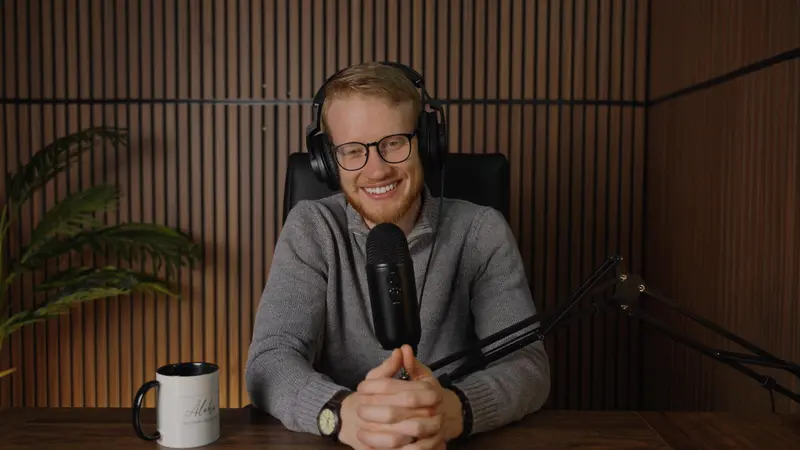
Nation Goetter
Nation runs Aloha Media Studio in Eagle, Idaho. He has produced 300+ episodes and projects for business owners across the Treasure Valley, and everything in these guides comes out of sessions run in his own room, not from a keyword tool.
More about the studio →