Podcast Studio Rental in Boise: 6 Options Compared (What You Actually Get)
Six real ways to record a podcast in the Boise area, from a spare office to a full video studio. What each one costs, and what you actually get.
Searching for a podcast studio usually starts with something else going wrong. The last episode sounded hollow, or it looked like it was shot in somebody’s office, and a better room feels like the obvious fix. Sometimes it is. Often the room was fine and the trouble was the lighting, or a microphone sitting in the wrong place, or nobody deciding what the episode was about before the camera went on.
Here is every way to record a podcast around here, cheapest first, including the ones that cost nothing. I run one of the six. I’ll tell you where the other five beat it.
| Option | What it costs | What you get | What you do not get |
|---|---|---|---|
| The room you already have | Nothing | Total control of your schedule | Sound treatment. Echo is what makes a show sound homemade. |
| Co-working or library room | Free to $30/hr | A door that closes, usually carpeted | Any gear. You set up and tear down every time. |
| Bare hourly rental room | $25 to $50/hr | A room built to sound good | Anyone running it. Mistakes surface in editing. |
| Music recording studio | $50 to $100/hr | The best audio on this list | A podcast setup. Most are not built to shoot video. |
| Full video podcast studio | $100/hr | Room, cameras, lighting, and a producer running it | Editing. Rental gets you the raw files. |
| Build your own | $3,000 to $20,000 | Unlimited recording, forever | Good results for the first several months. |
The full video studio is what we run in Eagle, so read that row knowing where it comes from. The honest comparison is below and it does not always land on us.
The room you already have
Your office after everyone leaves. A conference room. The spare bedroom nobody sleeps in. This is where most shows start, it costs nothing, and that’s the entire argument for it.
The part people underestimate is echo. Hard walls, a bare floor and not much furniture will bounce your voice around the room, and that hollow sound is the fastest way for a listener to tell a show was made at home.SoundGuys on podcasting from homeChecked 2026-08-04Nation's noteA rug, a couch and closed curtains will do more for your audio than a better microphone will. They’re cheaper, too. Soft stuff fixes most of it. Rugs, curtains, a couch, blankets hung on a couple of mic stands if you don’t mind looking ridiculous for an hour. You do have to go do it, though, and almost nobody does before episode one.
Record here if you’re doing audio only, the room is small and carpeted, and you’re willing to spend an afternoon working out where to put a microphone. Don’t record here if you want video. A camera in a normal room, lit by whatever lamp was already on, looks exactly like a camera in a normal room.
A co-working space or a library room
Free to about $30 an hour. Boise has co-working spaces and public rooms you can book by the hour, and some of them are quiet enough to record in.
You get a door that closes and usually a small carpeted room, which beats a big open office for sound. Everything else you bring: the gear, the setup, the teardown, and no say over what happens in the hallway while you’re rolling.
That last part is what costs you. Forty-five minutes of hauling equipment in and out around a one hour recording is normal, and it gets old at about the same speed the novelty does. Most of our clients tried this themselves before they called us. They started a show, did it for a little while, and stopped. Book a room like this if you already own the equipment and four decent walls are the only thing missing.
A bare hourly rental room
Roughly $25 to $50 an hour in this market. Somebody built a room that sounds good, they rent it out by the hour, sometimes with a couple of microphones already on the table, and then they leave you alone in it.
The room is the whole product and it’s worth the money. Acoustic treatment is boring, invisible, and the biggest single jump in quality on this list, and it’s the first thing people skip when they try to build their own.
What’s missing is a person. A camera drifts out of focus, or one microphone runs quieter than the other, or the lighting makes one guest look great and the person across from him look exhausted. Nobody in the room is watching for it. You find out in editing, and by then everybody has gone home.
A music recording studio
Often $50 to $100 an hour, depending on the room. Boise has good music studios, and a music studio will make your voice sound better than anything else on this list, because that’s what the room was built to do and because engineers who work with sound all day are very good at sound.
The shape is wrong for a podcast, though. A music studio is a live room and a control booth, which is right for a band and awkward for two people facing each other across a table with cameras on them. Some rooms have been adapted for it. Plenty haven’t, and most aren’t set up to shoot video at all, which for a business podcast is the part that matters most.
Book one if you’re making an audio-only interview show and voice quality is the thing you care about above everything else.
A full video podcast studio
Around $100 an hour. This one is my own studio, so factor that in. In Eagle it’s $100 per hour, $350 for a half day of four hours, or $600 for a full day of eight hours.
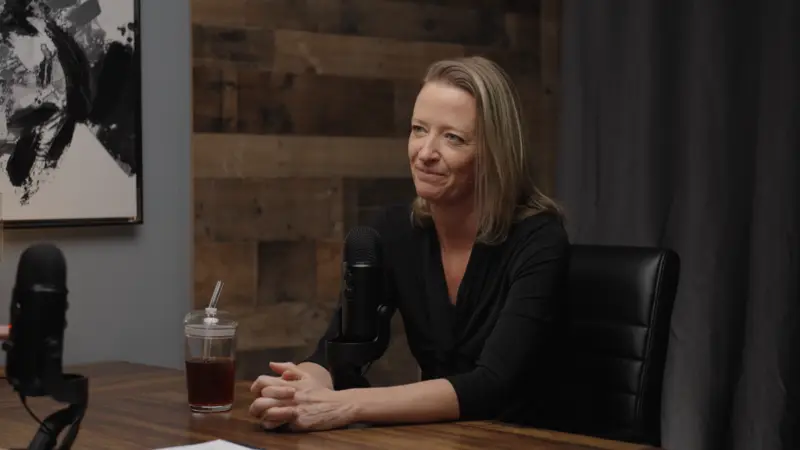
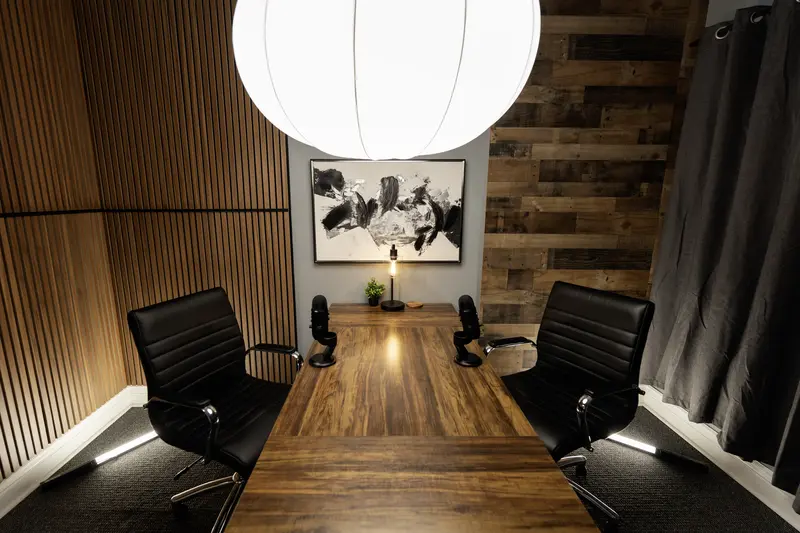
You get the room, a multi-camera setup, the lighting, the microphones, the set behind you, and somebody running all of it while you talk.The gear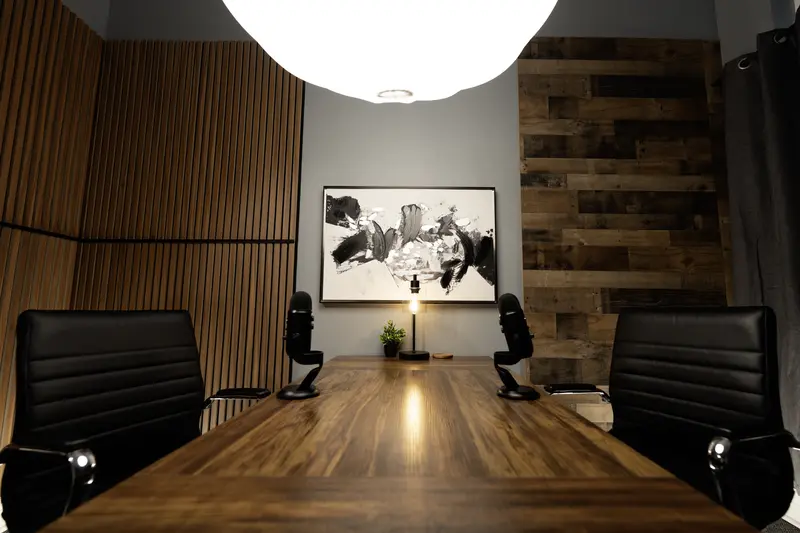 Three Sony bodies, Aputure lighting, and the microphone changes depending on the size of the group. Solo gets a different mic than four people around a table. That last part is what the extra money buys. You’re not running a camera and watching audio levels while you’re trying to hold a conversation, because somebody else is doing it.
Editing isn’t in there. Rental buys you a clean recording and the raw files, and turning six hours of footage into a published episode is a separate job that gets priced separately.
The price gap is easy to break out. At $25 to $50 an hour you’re renting a room. At $100 an hour you’re renting a room, several thousand dollars of camera and lighting gear, and me in there running it. Whether that’s worth double depends on whether you were going to do those two jobs well by yourself.
Build your own
Cameras, lenses, lights, stands, microphones, an interface, acoustic panels, and a table. $3,000 buys a modest setup and $20,000 buys a good one, and neither number includes the months you’ll spend learning to use any of it, or the room you stop using for anything else.
After that it’s yours. Record at midnight, record twice in a day, record for the next eight years, no clock running.
It won’t look good for a while, though. Buying the gear is the easy half. Knowing where to put it takes reps, and you get reps by shooting a pile of bad episodes first. Build the room if you’re going to record every single week for years, because at that volume the math works. Don’t build it to find out whether you enjoy podcasting.
How to actually choose
Forget the prices for a minute and answer one question honestly.
Do you know how to make a recording look and sound good, or do you need someone else to handle that?
If you know how, rent the cheapest room that sounds right and spend nothing else. Your own office, a co-working room, a bare hourly studio. You’ll get a better result than most of the people paying four times as much, because you already have the part that takes years to learn.
If you don’t know how, a nicer room won’t fix it. An empty room that sounds great is still an empty room. You need a person in there with you, which is the full video studio, or you need to become that person, which is the build-your-own path, and that takes about a year.
Then there’s video. Audio only and your options open way up and you can spend far less. If you want video, and for a business podcast you almost certainly should, the list gets short fast. Video is where the distance between doing it yourself and hiring it out is widest. Bad lighting shows up in half a second. Mediocre audio, most people sit through.
One thing nobody tells you about hourly rates
The hourly rate isn’t your bill. Your bill is that rate times how long you’re in the room, and the hours are set almost entirely by how prepared you were when you walked in.
Independent podcasters report spending one to five hours on a single episode from planning through publishing, and the ones at the fast end of that range are the ones still publishing weekly.podcast industry statisticsChecked 2026-08-04 Two people who never planned the episode will burn ninety minutes recording forty minutes of usable material and then throw half of that away in editing. Two people who mapped it out beforehand are done in an hour with something they can publish. Same room, same rate, and the first pair pays twice as much.
A lot of the times, podcast companies are just the production agency. They set up the camera and say, “Go!” That’s why we don’t hand you the room and walk away. Before we set up a single camera I want to know who you’re talking to, what you want them to walk away believing, and what you’re qualified to say that nobody else in your market is saying. Planning is the cheapest thing on this whole page and it’s the thing almost everyone skips.
You’re paying by the hour, so what a studio costs you is how long it takes to say something worth keeping. Plan the episode first and you’re in and out.
Come see the room
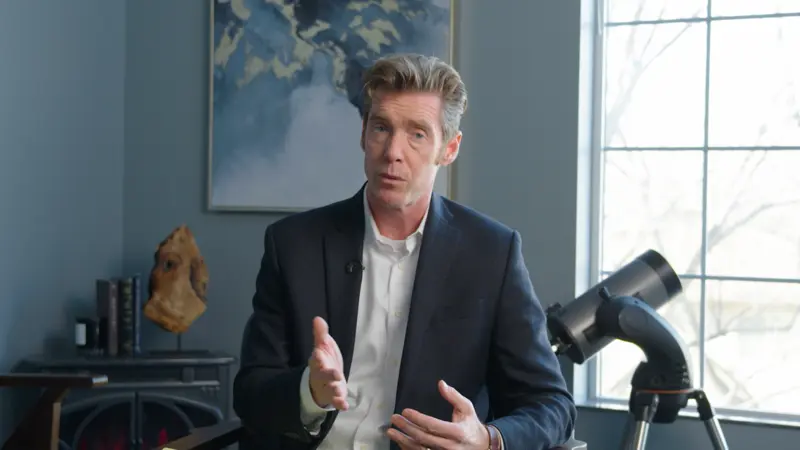
We’re in Eagle, about twelve minutes from downtown Boise. Parking is easy and sessions are by appointment. Rental is $100 per hour for the room on its own, or $150 per hour with a producer running the cameras and audio. A half day is $350 and a full day is $600.
If you got through all six of those and one of the cheaper ones is your answer, go take it. I’d rather you did. But if you’d sooner sit down, have the conversation, and walk out with footage that already looks right, that’s what the room is for.
Common questions
- How much does it cost to rent a podcast studio in Boise?
- It depends on what comes with the room. A bare hourly room in the Boise area typically runs $25 to $50 an hour. A full video podcast studio with cameras, lighting, and a producer running the session runs around $100 an hour. At Aloha Media Studio in Eagle, rental is $100 per hour, $350 for a half day of four hours, or $600 for a full day of eight hours.
- Do I need a studio to start a podcast?
- No. Plenty of good podcasts get recorded in a quiet office with decent microphones. You need a studio when you want video, when you want it to look professional without learning to light and shoot it yourself, or when the room you have keeps ruining your audio.
- Can I record a video podcast at home?
- You can, and some people do it well. The hard parts are lighting, camera angles, and sound bouncing off hard walls. Those are the three things that make home video look like home video. If you are willing to learn them, home works. If you are not, that is what a studio is for.
- What is included with studio rental at Aloha Media Studio?
- The room, professional lighting, microphones, the set and background, with you running the session. Add a producer for $50 an hour and you also get a three-camera Sony setup with Nation running the technical side while you talk. You leave with the raw files. Editing is a separate service if you want it.
- Is it cheaper to build my own podcast studio?
- Over a long enough time, yes. Cameras, lights, microphones, acoustic treatment, and a dedicated room add up to several thousand dollars before you record anything. If you are recording weekly for years, building pays off. If you are recording six episodes to find out whether you like it, renting is far cheaper.
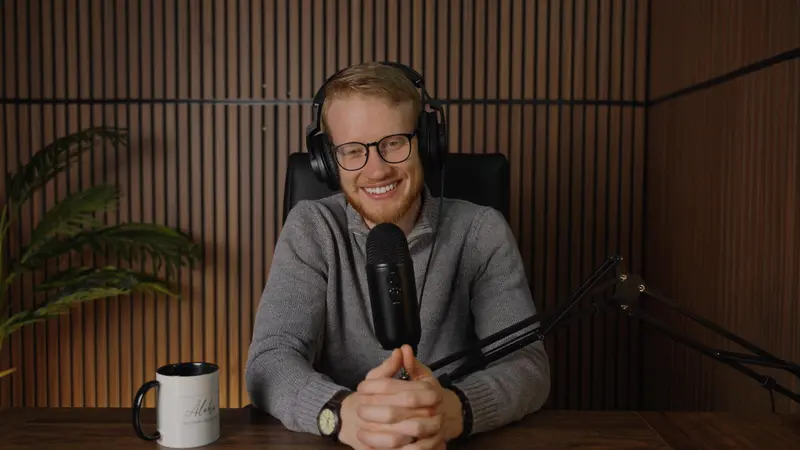
Nation Goetter
Nation runs Aloha Media Studio in Eagle, Idaho. He has produced 300+ episodes and projects for business owners across the Treasure Valley, and everything in these guides comes out of sessions run in his own room, not from a keyword tool.
More about the studio →